PPC
Google Ads vs Facebook Ads for Small Businesses
A practical comparison of Google Ads and Facebook Ads for small businesses based on budget, industry, buyer intent, and goals.
A practical PPC guide focused on offer clarity, landing pages, targeting, and tracking instead of exaggerated ad-performance claims.
Paid ads work best when the business is already clear about what it is selling and where it wants visitors to land.
If the landing page is vague, broad, or slow, the campaign has to fight unnecessary friction from the start.
For local businesses, broad targeting often wastes money. Better campaign structure usually starts with:
The offer in the ad should feel like the same offer on the page. That sounds basic, but it gets ignored all the time.
If the business cannot tell which campaigns lead to real inquiries, it is too early to act confident about performance.
Ads are often sold as a shortcut around weak fundamentals. In practice, they work better as support for:
If the site is still unclear, the smartest paid-traffic move is often to fix the website first. Start with the BearGorilla Signature Build, then layer in PPC support when the foundation is ready.
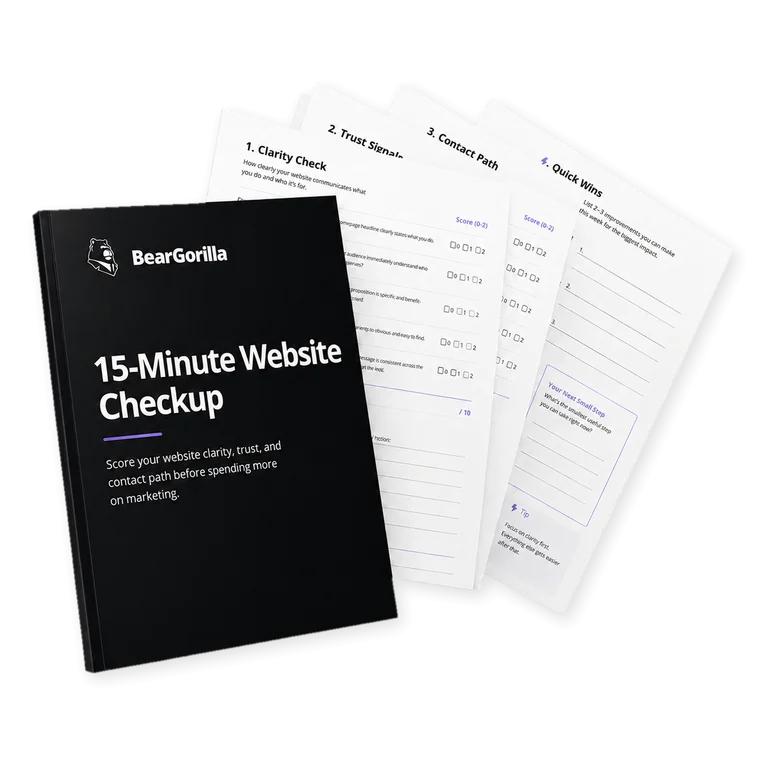
Run a quick self-check of your current site. In 15 minutes, spot the biggest clarity, trust, and contact-path issues — then decide whether to DIY the fixes or ask for a deeper review.
Explore more insights and tips from our blog
Get a free consultation based on your goals — clear next steps included.